
BRUSHTAIL ROCK WALLABY SURVEY
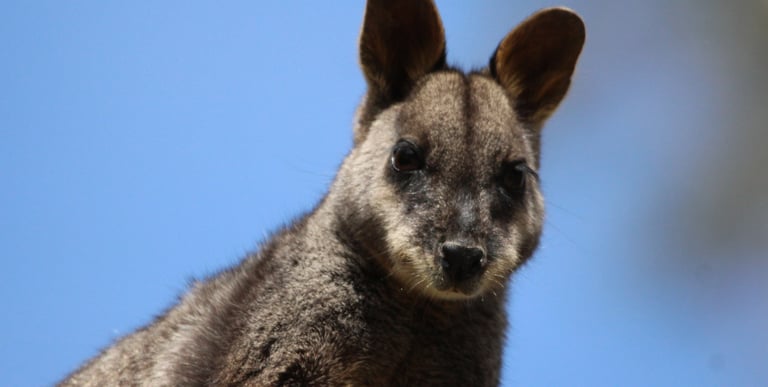
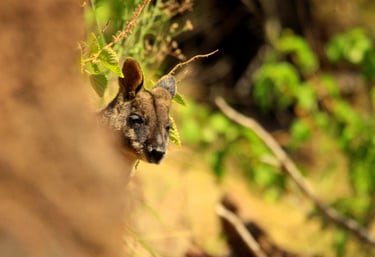
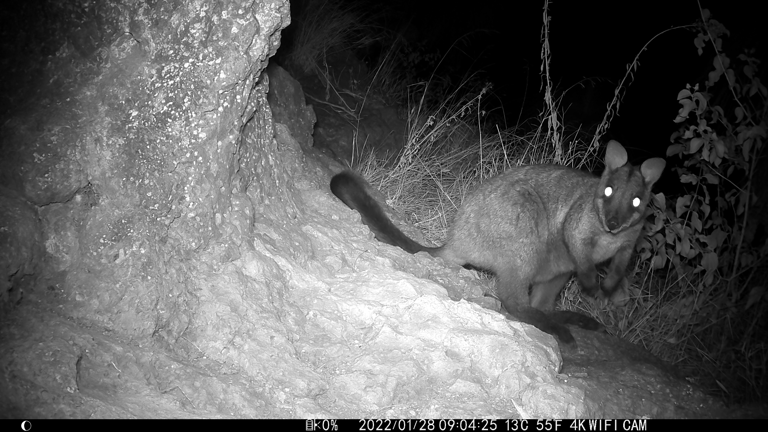
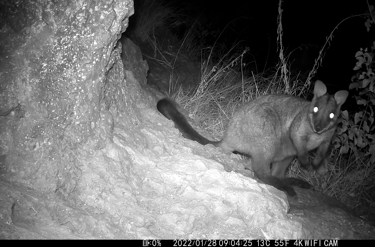
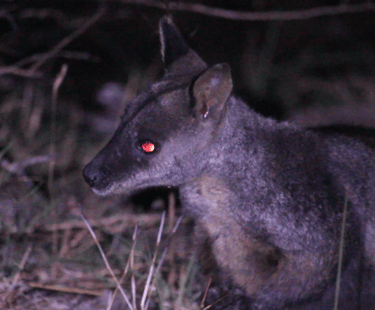
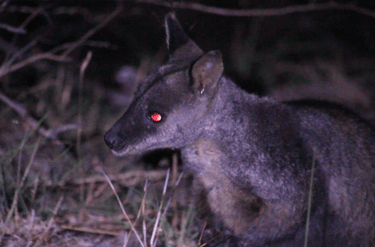
During our Pre & Post Ecological Burns Effects On Wildlife in SEQ Research, we particularly gave our attention to surveying the focal species, the Brush-tailed Rock Wallaby.
By following the lives of a single, small colony through camera trapping, tracking and daytime & night time observations, we gained the knowledge of the incredible behavioural ecology of this species, which was very useful in our study.
The most puzzling question was the isolation of this colony. No other known colonies resided in any proximity, and given the colony's low numbers of individuals, females would have to migrate long distances through dangerous areas to prevent inbreeding. This triggered several expeditions to the poorly known locations within the mountain range, targeting the highest peaks and the deepest gorges. During one of these explorations, a new colony of Brush-tailed Rock Wallabies was discovered, located only several miles away. This colony inhabited an isolated, hard accessible gorge system and was probably the closest genetically related colony.
This discovery was incredibly exciting and only deepened the mystery surrounding the secretive lives of these amazing animals within the deep, mountainous bush.
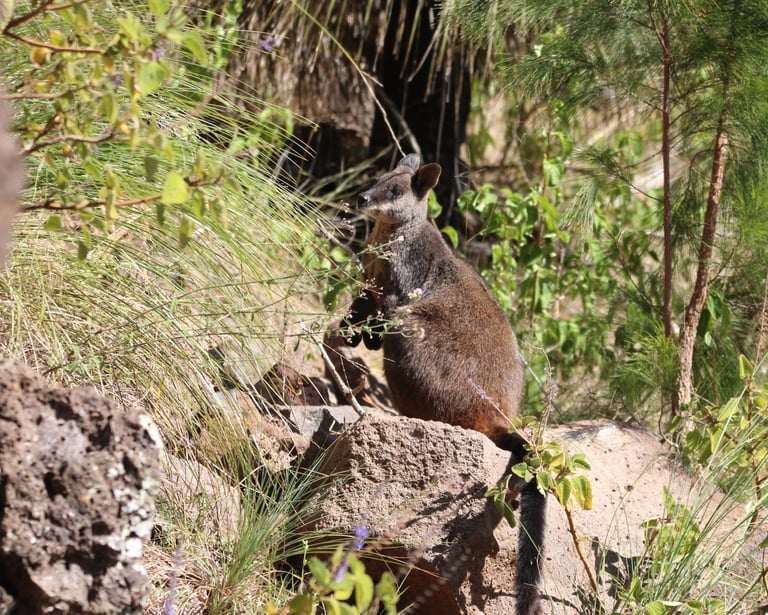
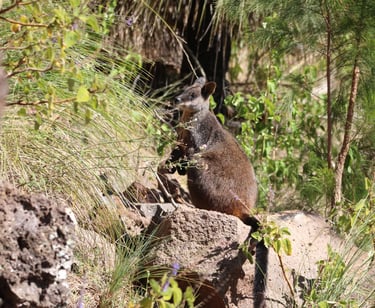
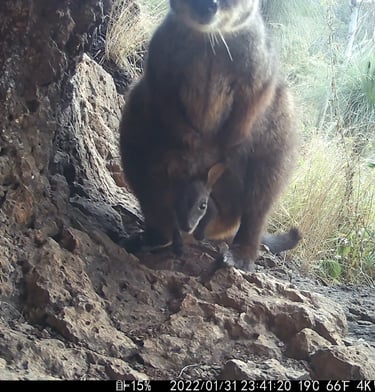
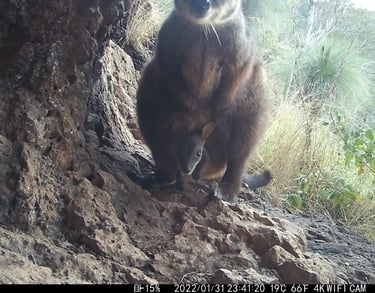
BRUSH-TAILED ROCK WALLABY
The Brush-tailed Rock Wallaby is a species of macropod marsupial that inhabits rocky environments and is, like other species of rock wallabies, known for its incredible agility and adaptation to rocky terrains.
This species is listed as VULNERABLE on the IUCN Red List. Its population decline is the result of several factors, such as predation by feral dogs and foxes, early overhunting, bushfires and other ecological catastrophes. However, one of the most prominent threats is incorrectly conducted burn-offs. Mainly due to the introduction of invasive grass species such as the Green Panic (Megathyrsus maximus), the threat of devastating bushfires is much higher, and property owners conduct yearly burn-offs, in which they are often not experienced and cause very hot fires that destroy the entire habitat. This eventually leads to the population fragmentation of many species, including the rock wallabies.
Please see more information on ecological burns below
Searching for volunteer placements to enhance your career? Or are you an organisation that truly wants to make a change? Or are you an everyday person who just wants to do something for the future?
Whatever the enquiry might be, please do not hesitate to contact us to learn more. Our team of dedicated professionals are here to help!
CONTACT US
PHONE
+353 85 716 6328
© 2025. All rights reserved.